

The internet has completely changed the way people create, publish, and sell knowledge.
In the past, becoming an author usually meant writing a manuscript, finding a publisher, printing thousands of copies, storing physical books, and depending on bookstores or distributors to reach readers.
Today, things can be very different.
A laptop, a useful idea, good writing, professional formatting, and access to digital publishing platforms can be enough to start creating and selling an eBook.
An eBook is simply a book or guide that is delivered digitally rather than printed on paper. It can be read on smartphones, tablets, computers, e-readers, and other compatible devices.
For aspiring online entrepreneurs, students, teachers, freelancers, professionals, and content creators, eBooks can become an interesting digital-product business model.
You could create a practical guide about a subject you understand, turn your knowledge into a well-designed digital book, and make it available to readers online.
Possible topics include:
- Exam preparation
- Study notes
- Spoken English
- Basic coding
- Digital marketing
- Freelancing
- Graphic design
- Personal productivity
- Business
- Career development
- Cooking
- Fitness
- Photography
- Social media
- Artificial intelligence
- Software tutorials
- Personal finance education
The opportunity is not simply about writing a long document.
The real opportunity is to turn useful knowledge into an organized solution that helps a specific reader achieve a specific goal.
For example, instead of writing a generic book called:
"Learn English"
you could create something much more focused:
"30-Day Spoken English Guide for Beginners"
Instead of:
"Learn Coding"
you could create:
"A Beginner's Guide to Python Programming"
Instead of:
"Study Tips"
you could create:
"SSC Exam Revision Guide: Short Notes, Practice Questions and Study Strategies"
Specific products are easier to understand, market, and position.
What Is an eBook?
An eBook is a digital publication that contains written information, illustrations, exercises, references, or other educational or creative material.
Unlike a traditional printed book, an eBook can be distributed electronically.
Depending on the publishing platform and format, readers may access an eBook using:
- Smartphones
- Tablets
- Computers
- E-readers
- Reading applications
For creators, one of the biggest advantages is the ability to distribute information digitally.
There is no need to maintain a physical warehouse full of books.
There is no need to package individual copies.
There is no traditional shipping process for a digital download.
However, digital publishing does not mean that success is automatic.
A poorly written or poorly formatted eBook will not suddenly become valuable simply because it is digital.
The product still needs to provide a useful experience.
Why Selling eBooks Can Be an Attractive Digital Business
Knowledge is valuable.
People regularly pay for information that helps them:
- Save time
- Learn a skill
- Prepare for an exam
- Solve a problem
- Improve their career
- Start a project
- Understand a complicated subject
- Avoid common mistakes
- Achieve a specific goal
An eBook gives creators a way to organize that knowledge into a product.
Imagine that you have spent years learning basic programming.
Instead of answering the same beginner questions repeatedly, you could organize your knowledge into a structured guide.
The guide could explain:
- What programming is
- How programming languages work
- Basic syntax
- Variables
- Conditions
- Loops
- Functions
- Simple projects
- Common mistakes
- Practice exercises
Now your knowledge has been transformed into a reusable digital resource.
That is the fundamental idea behind knowledge-based digital products.
Choose the Right eBook Topic
Choosing the right topic is one of the most important steps.
Do not begin by asking:
"What can I write about?"
Instead ask:
"What does my target reader need help with?"
A good eBook topic usually has a clear audience and a clear purpose.
For example:
Education
- SSC short notes
- Mathematics revision guide
- English grammar
- Vocabulary builder
- Exam preparation strategies
Technology
- Basic coding
- Python for beginners
- HTML and CSS basics
- AI tools for beginners
- Computer fundamentals
Language Learning
- Spoken English
- English conversation
- Common grammar mistakes
- Vocabulary exercises
- English for job interviews
Business
- Small business planning
- Social media marketing
- Beginner freelancing
- Personal branding
- Online business fundamentals
Productivity
- Time management
- Goal setting
- Daily planning
- Habit building
- Study productivity
The more specific the topic, the easier it becomes to define your ideal reader.
Solve One Problem With One Book
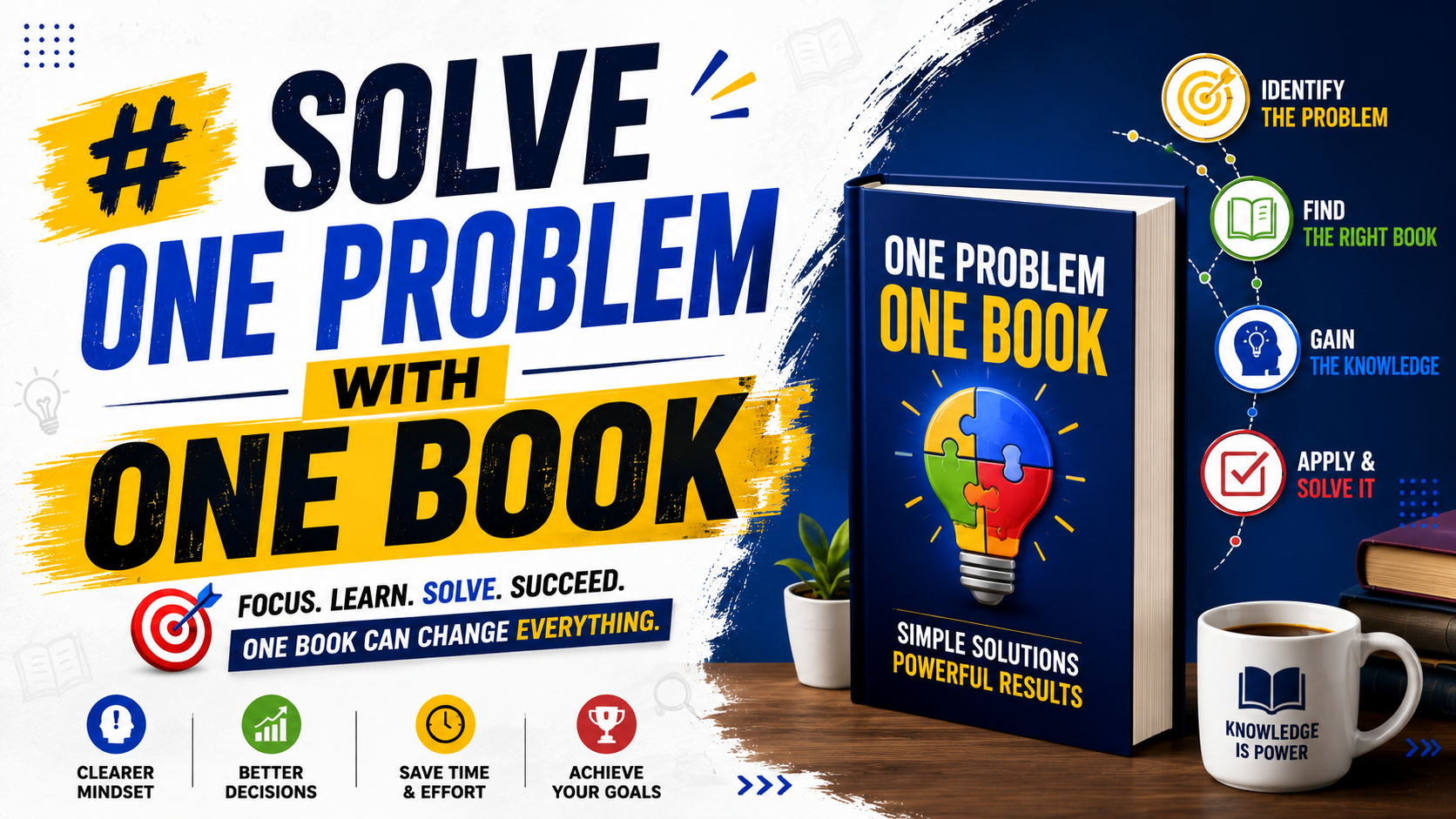
A common mistake among new eBook creators is trying to teach everything in one book.
That can make the book confusing.
Instead, think about your eBook as a solution to one major problem.
For example:
Problem: A student struggles to revise an entire subject before an exam.
Possible eBook:
"SSC Final Revision Guide: Essential Notes for Last-Minute Preparation"
Another example:
Problem: A beginner wants to learn programming but does not know where to start.
Possible eBook:
"Coding from Zero: A Beginner's Introduction to Programming"
Another:
Problem: Someone understands English grammar but struggles to speak naturally.
Possible eBook:
"Speak English with Confidence: Practical Rules and Everyday Conversations"
A strong eBook answers a specific need.
Research Before You Write
Before spending weeks writing an eBook, research the market.
Look at what people are already searching for.
Study existing books, guides, courses, videos, and educational resources around your topic.
Ask:
- What questions do beginners frequently ask?
- What topics are already popular?
- What do existing books do well?
- What information appears to be missing?
- What complaints do readers have?
- What could be explained more simply?
- Can you target a narrower audience?
The goal is not to copy an existing book.
The goal is to understand the market and find opportunities to create something more useful or more focused.
Your research should help answer:
Why should someone choose my eBook?
Create a Strong eBook Outline
Before writing the actual content, create an outline.
A good outline gives your book a logical structure.
For example, a beginner coding eBook might look like this:
Chapter 1: Introduction to Programming
Explain what programming is and why it matters.
Chapter 2: Understanding Programming Languages
Introduce the concept of programming languages.
Chapter 3: Variables and Data
Explain the fundamentals with simple examples.
Chapter 4: Conditions
Introduce decision-making logic.
Chapter 5: Loops
Explain repetition using beginner-friendly examples.
Chapter 6: Functions
Show how reusable blocks of code work.
Chapter 7: Mini Projects
Give readers practical exercises.
Chapter 8: Common Beginner Mistakes
Explain mistakes and how to avoid them.
Chapter 9: Next Steps
Provide a roadmap for continued learning.
This structure gives the reader a journey.
They start with the basics and gradually move toward practical application.
Make Your eBook Easy to Read
A great eBook is not simply a collection of information.
It should be easy to consume.
Use:
- Short paragraphs
- Clear headings
- Subheadings
- Bullet points
- Tables where appropriate
- Examples
- Exercises
- Checklists
- Summaries
- Visual elements
- Consistent formatting
Avoid creating huge blocks of text.
Readers are more likely to continue reading when information is visually organized.
For educational books, practical examples can be particularly valuable.
Instead of explaining a concept for three pages, explain it briefly and then show the reader how it works.
Turn Your Knowledge Into a Learning Experience
If you are creating an educational eBook, think beyond information.
Think about transformation.
Ask:
What should the reader be able to do after finishing this book?
For example:
After reading a beginner English eBook, the reader might be able to:
- Introduce themselves
- Ask basic questions
- Use common sentence patterns
- Understand important grammar rules
- Practice everyday conversations
After reading a beginner coding eBook, the reader might be able to:
- Understand programming concepts
- Write basic code
- Create simple programs
- Debug basic errors
- Continue learning independently
The goal is to move the reader from Point A to Point B.
That makes the product much more valuable.
Add Exercises and Practical Examples
One powerful way to improve an eBook is to make it interactive.
Suppose you are creating an English-learning guide.
Instead of only explaining grammar rules, include:
Practice Exercise
Complete the following sentences.
Speaking Practice
Introduce yourself in five sentences.
Vocabulary Challenge
Learn ten new words and use each one in a sentence.
Real-Life Conversation
Practice a conversation between a customer and a shopkeeper.
This transforms the eBook from a passive reading experience into a practical learning tool.
The same principle applies to coding, business, marketing, and other educational topics.
Use AI as an Assistant
Artificial intelligence can significantly speed up the eBook creation process.
Tools such as ChatGPT can help with:
- Brainstorming topics
- Creating outlines
- Generating chapter ideas
- Explaining concepts
- Developing examples
- Creating exercises
- Improving grammar
- Rewriting unclear sections
- Creating checklists
- Generating FAQ sections
- Writing promotional copy
However, AI-generated content should not simply be copied and published without review.
AI can make mistakes.
It can produce outdated information.
It can misunderstand context.
It can sometimes produce generic or repetitive writing.
The strongest approach is to use AI as an assistant while keeping human judgment at the center of the project.
Your expertise, experience, editing, examples, and perspective are what can make the book unique.
Add Your Own Experience
One of the easiest ways to make an eBook more valuable is to add original insights.
Instead of simply explaining:
"Time management is important."
You could explain:
- How you organize tasks
- Which mistakes beginners make
- How to prioritize work
- How to plan a week
- What happens when people multitask too much
- How to create a realistic schedule
Personal observations and practical examples make educational material feel more useful.
If you are teaching a technical subject, explain concepts in your own words.
If you are creating a study guide, include practical revision strategies.
If you are writing about business, include realistic examples.
Your perspective can become part of your product's competitive advantage.
Design Your eBook Professionally
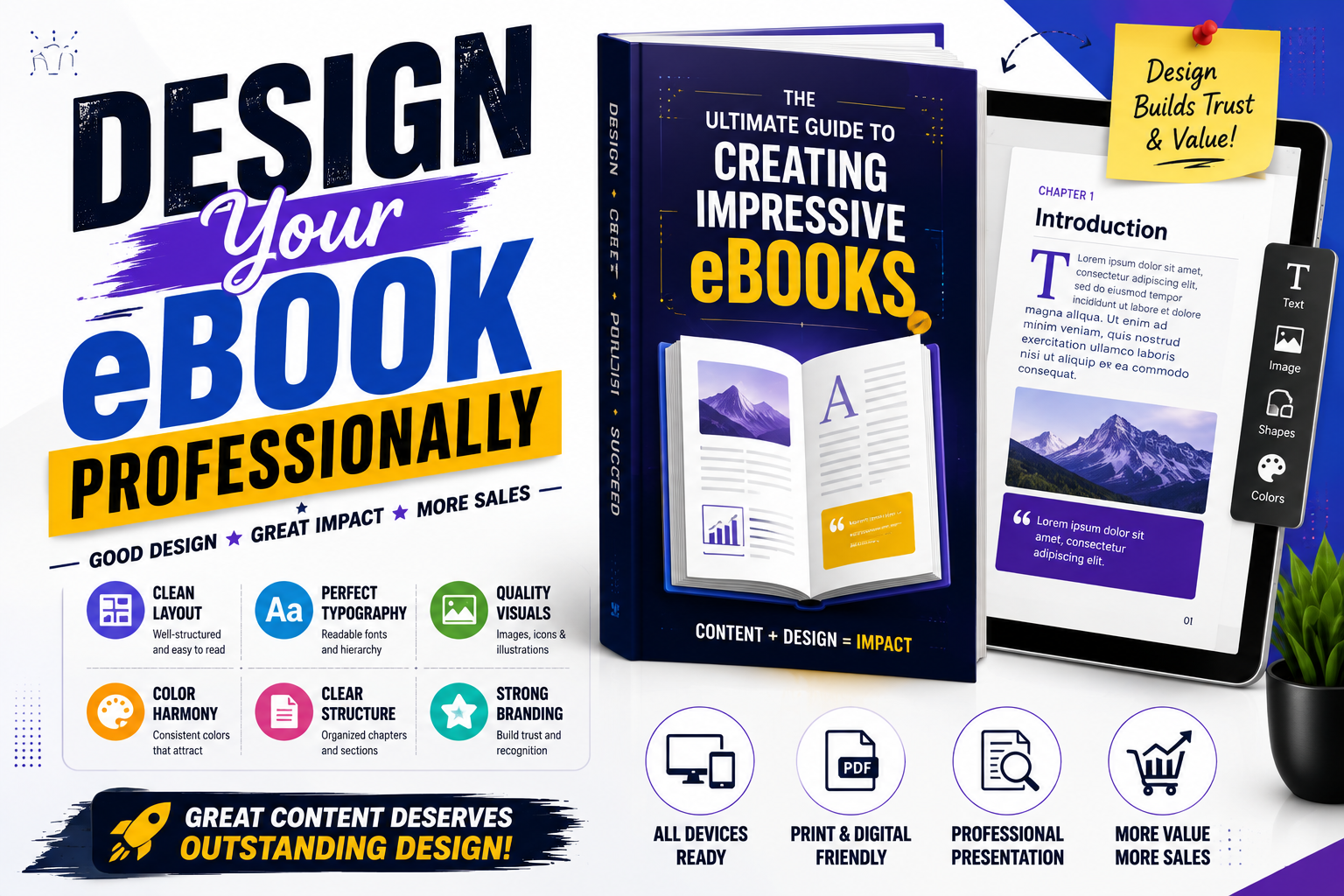
Content matters, but presentation matters too.
A professionally designed eBook should have:
- A strong cover
- Consistent typography
- Clear chapter headings
- Proper spacing
- Page numbers where appropriate
- Consistent margins
- Visual hierarchy
- Clean tables
- Well-formatted examples
The cover is especially important because it is often the first thing a potential buyer sees.
A good cover should communicate:
What is this book about?
Who is it for?
What benefit does it provide?
For example:
30-Day Spoken English
could use a clean title, subtitle, simple visual elements, and a professional layout.
You do not need an extremely complicated design.
In many cases, simple and professional is better than crowded and flashy.
Convert Your eBook Into PDF
PDF is one of the most familiar formats for digital guides and educational resources.
You can create your document using a word processor or design application and export it as a PDF.
Before publishing, check:
- Page size
- Font consistency
- Image quality
- Margins
- Page breaks
- Table alignment
- Hyperlinks
- Spelling
- Grammar
- File size
Open the final PDF on multiple devices if possible.
A file that looks perfect on a computer may appear differently on a smartphone.
Always inspect the final exported file.
Amazon KDP as a Publishing Option
Amazon Kindle Direct Publishing, commonly known as KDP, is one option for authors who want to publish books through Amazon's ecosystem.
Authors can create publishing accounts, prepare their manuscripts and covers, provide book information, and submit their work according to the platform's current requirements.
KDP supports different book formats and publishing options, and the exact requirements, royalty structures, territories, and policies can change over time.
Therefore, always review the current KDP guidelines before publishing.
The advantage of using a major publishing platform is that you can potentially reach readers who are already shopping for books.
But publishing a book does not guarantee sales.
You still need:
- A good topic
- A strong title
- A useful book
- Professional formatting
- An attractive cover
- Accurate metadata
- Appropriate keywords
- Effective promotion
Publishing is the beginning, not the end.
Selling eBooks Through Your Facebook Page
Another option is selling digital products directly through your own audience.
For example, you might have a Facebook page focused on:
- Education
- English learning
- Coding
- Business
- Freelancing
- Study resources
You could create educational content related to your niche and introduce your eBook as a deeper resource.
For example:
A page that posts English-learning tips could promote:
"30-Day Spoken English Practice Guide."
A coding page could promote:
"Programming Fundamentals for Complete Beginners."
An education page could promote:
"SSC Final Revision Notes."
The key advantage of building an audience is trust.
People who regularly find your content useful may be more interested in your paid resources.
However, you should make sure that your selling and payment process complies with applicable laws, platform rules, and consumer-protection requirements in your market.
Build an Audience Before Selling
One of the strongest strategies for an eBook business is to build an audience around the subject before launching the product.
Suppose you want to sell a spoken English eBook.
Instead of immediately asking people to buy it, create useful free content:
- Daily English vocabulary
- Common grammar mistakes
- Speaking tips
- Mini conversations
- Pronunciation lessons
- Short quizzes
- English challenges
People begin following your page because the content helps them.
Later, you can introduce your eBook.
This creates a simple funnel:
Free Content → Trust → Audience → eBook → Customer
The same model can work in coding, education, business, marketing, and many other niches.
Create a Free Sample
A free sample can reduce the customer's hesitation.
For example, if your eBook contains 100 pages, you could provide a small preview.
Or you could offer:
Free Chapter 1
or:
10 Free Pages
or:
20 Free Practice Exercises
The goal is to let potential customers experience the quality of your work.
If they find the free material genuinely useful, they may become interested in the complete guide.
Price Your eBook Strategically
Pricing depends on the topic, audience, length, quality, competition, and value of the information.
A short beginner guide may have a different price from a comprehensive professional handbook.
Do not price solely based on page count.
A 40-page book that solves a specific problem can be more valuable than a 200-page book filled with generic information.
Consider:
- How specific is the topic?
- How useful is the information?
- How much time does it save?
- How difficult was it to create?
- Who is the target customer?
- What alternatives already exist?
- What are comparable products priced at?
Your goal should be to find a price that reflects the value of the product while remaining reasonable for the target audience.
Create Multiple Versions
You can also create different versions of the same core eBook.
For example:
Basic Version
eBook only.
Premium Version
eBook + worksheets + exercises + checklist.
Complete Version
eBook + worksheets + exercises + templates + bonus resources.
This gives customers different options.
It can also help you understand what customers value most.
Add Bonus Materials
Bonuses can increase the perceived value of an eBook.
For example, a spoken English book could include:
- Vocabulary list
- Practice worksheets
- Conversation scripts
- 30-day challenge
- Grammar cheat sheet
A coding book could include:
- Practice exercises
- Project ideas
- Cheat sheets
- Coding checklist
- Beginner roadmap
An exam guide could include:
- Revision checklist
- Practice questions
- Study planner
- Quick-reference notes
The bonus should be relevant.
Do not add random files simply to make the product look larger.
Marketing Your eBook
Marketing is one of the most important parts of the business.
You can promote an eBook through:
- YouTube
- TikTok
- Email newsletters
- Blogs
- Search engines
- Online communities
Your content should focus on the reader's problem.
For example:
Instead of posting:
"Buy my English eBook."
you could create:
"5 English mistakes beginners make every day."
Then explain the mistakes.
At the end, introduce your eBook as a resource for people who want to learn more.
This approach provides value first.
Use Short-Form Content
Short-form videos can be powerful for promoting educational eBooks.
For a coding book, create a short tutorial.
For an English book, teach one useful phrase.
For an exam guide, share one revision technique.
For a business book, explain one practical strategy.
The video demonstrates your knowledge.
The eBook provides the complete resource.
This creates a natural connection between free content and paid products.
Build an Email List
Social-media platforms can change their algorithms.
Your audience is never completely under your control when it exists only on a social platform.
An email list gives you another way to communicate with interested readers.
You could offer a free resource such as:
10 Free English Speaking Exercises
in exchange for an email subscription, where lawful and appropriate.
Then you can send:
- Educational tips
- New content
- Product updates
- New eBook announcements
- Special offers
- Helpful resources
Email marketing can become a valuable long-term asset for a digital-product business.
Protect Your eBook
Digital products can be copied and redistributed.
There is no perfect way to eliminate piracy.
However, you can take reasonable steps to protect your work.
For example:
- Add copyright information
- Include a clear license
- Explain permitted usage
- Avoid sharing editable source files unnecessarily
- Use platform delivery systems where appropriate
- Monitor obvious unauthorized distribution
Your copyright notice should clearly communicate what customers can and cannot do with the material.
Copyright and Originality Matter
Never copy another author's book and attempt to sell it as your own.
Do not reproduce copyrighted educational material without appropriate permission.
Be careful when using:
- Images
- Illustrations
- Stock photos
- Fonts
- Charts
- Third-party templates
- AI-generated material
- Quotes
- Research content
If you use third-party material, understand the relevant license and attribution requirements.
For educational books, factual accuracy is especially important.
If you are writing about exams, technology, law, finance, medicine, or other areas where information can change or carry significant consequences, verify important information using reliable and current sources.
Quality Control Matters
Before publishing an eBook, perform a complete quality check.
Read the book from beginning to end.
Check:
Spelling
Look for typographical mistakes.
Grammar
Make sure sentences are clear.
Accuracy
Verify important facts.
Formatting
Check headings, spacing, tables, and page breaks.
Links
Test hyperlinks.
Images
Make sure images are sharp and properly positioned.
Consistency
Use consistent terminology and formatting.
Mobile Readability
Check how the PDF or digital format looks on smaller screens.
A customer who pays for an eBook expects a finished product.
Professional quality can make the difference between a one-time buyer and a repeat customer.
Don't Make Your eBook Too Long Just to Make It Look Valuable
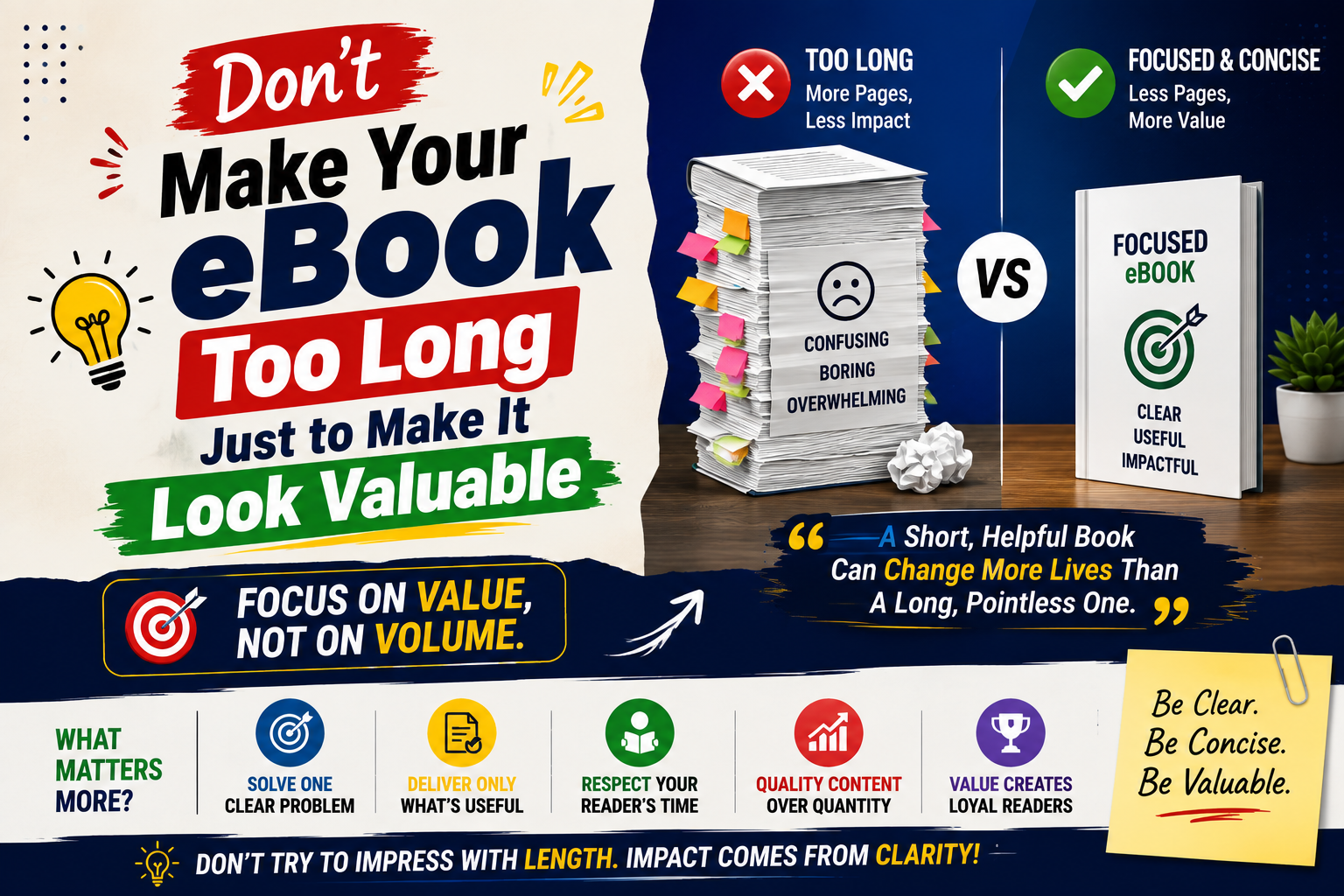
Longer does not always mean better.
A 300-page book full of repetition may be less useful than a 60-page guide that solves the customer's problem clearly.
Focus on:
Clarity + Relevance + Practical Value
Remove unnecessary repetition.
Use examples where they help.
Summarize important concepts.
Give readers practical steps.
Respect their time.
A concise, actionable book can create a better customer experience.
Turn One eBook Into Multiple Products
One eBook can become the foundation for a larger digital-product ecosystem.
Imagine you create a book called:
"Beginner's Guide to Spoken English."
You could later create:
Product 2: English Vocabulary Workbook
Product 3: 30-Day Speaking Challenge
Product 4: English Conversation Practice Pack
Product 5: Grammar Cheat Sheet
Product 6: Complete English Learning Bundle
This allows you to build multiple products around the same audience.
The original eBook becomes the starting point.
Create an eBook Series
Instead of one giant book, you could create a series.
For example:
Book 1
English Grammar Basics
Book 2
Everyday English Conversations
Book 3
Vocabulary for Beginners
Book 4
English for Job Interviews
Book 5
Advanced Speaking Practice
Readers who finish one book may be interested in the next.
This can create a stronger long-term product strategy than constantly switching between unrelated topics.
A Simple eBook Business Workflow
Here is a practical process you can follow.
Step 1: Choose a Niche
Select a subject where you understand the audience.
Step 2: Identify a Problem
Find a specific problem your reader wants to solve.
Step 3: Research
Study competing books, questions, reviews, and available resources.
Step 4: Create an Outline
Organize your content into a logical sequence.
Step 5: Write
Create useful, original, reader-focused content.
Step 6: Edit
Improve clarity, grammar, examples, and structure.
Step 7: Design
Create a professional cover and clean internal layout.
Step 8: Export
Prepare the appropriate digital file format.
Step 9: Quality Check
Review the entire product before publication.
Step 10: Publish
Use a suitable publishing platform or direct-selling channel.
Step 11: Market
Create useful free content related to the topic.
Step 12: Improve
Use customer questions and feedback to improve future editions.
How AI Can Make the Process Faster
Artificial intelligence can help at almost every stage.
You can use AI to brainstorm:
"What problems do beginner English learners have?"
Then ask it to organize those problems into potential chapters.
You can ask for:
- Chapter outlines
- Exercise ideas
- Examples
- Quiz questions
- Summary sections
- FAQ ideas
- Marketing content
You can also use AI as an editing assistant.
However, the final responsibility remains with you.
Read the content.
Verify the facts.
Add your own examples.
Remove generic material.
Make sure the book sounds natural.
AI should help you create faster—not encourage you to publish low-quality content.
Can Selling eBooks Become Passive Income?
eBooks can have some characteristics of scalable digital income.
Once a book is created and published, the same digital content can potentially be sold to multiple customers without printing a new physical copy each time.
But "passive income" should not be interpreted as "money without work."
Successful authors and digital-product creators still need to:
- Research new topics
- Update older books
- Respond to customers
- Market their products
- Improve product pages
- Create new resources
- Monitor platform policies
- Maintain quality
The better way to think about eBooks is:
Create valuable knowledge once, then build systems that allow that knowledge to reach more people.
Start With One eBook
You do not need ten books to begin.
You do not need a huge publishing company.
You do not need thousands of followers.
Start with one useful product.
Choose a topic you understand.
Identify a specific audience.
Solve one clear problem.
Create a professional guide.
Publish it.
Then learn from the response.
If readers ask for additional material, that feedback can become your next product.
This creates a cycle:
Create → Publish → Learn → Improve → Expand
Final Thoughts
Selling eBooks is one of the simplest ways to turn knowledge, research, and expertise into a digital product.
Whether you want to create an SSC study guide, a beginner coding book, a spoken English handbook, a business guide, a productivity workbook, or another educational resource, the basic process remains similar.
Find a real problem.
Understand your reader.
Create a useful solution.
Write clearly.
Design professionally.
Check everything carefully.
Publish through an appropriate platform.
Then market the product consistently.
Artificial intelligence can make the process faster, but it does not replace the need for original thinking and quality control.
A successful eBook is not simply a PDF filled with words.
It is a structured solution to a reader's problem.
The strongest eBooks help people learn something, accomplish something, avoid a mistake, save time, or move closer to a specific goal.
That is what creates value.
So, instead of asking:
"What eBook can I make?"
ask:
"What can I teach that will genuinely help someone?"
That question can lead you toward a much stronger product.
Start small.
Choose one audience.
Solve one problem.
Create one excellent eBook.
Publish it.
Listen to your readers.
Then build from there.
The digital publishing world gives individual creators more opportunities than ever before.
You do not need to wait for someone to give you permission to share your knowledge.
You can turn what you know into a useful digital product—and potentially build an entire business around it.
Your knowledge is the raw material.
Your eBook is the product.
Your audience is the opportunity.
And with the right strategy, one well-made eBook can become the first step toward a much larger digital-product business.
Hi, this is a comment.
To get started with moderating, editing, and deleting comments, please visit the Comments screen in the dashboard.
Commenter avatars come from Gravatar.