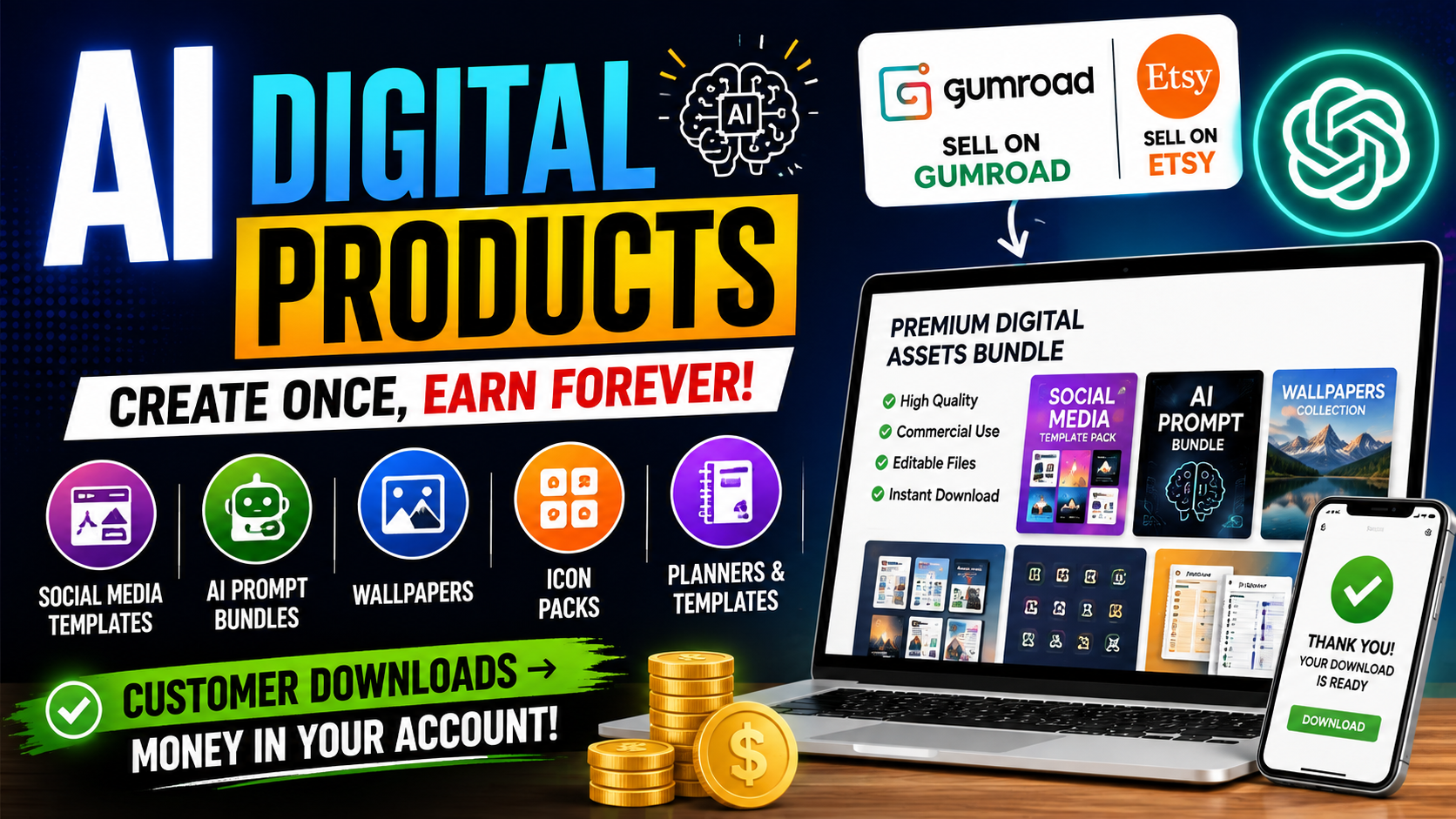

AI Digital Products are becoming one of the most interesting opportunities in the modern creator economy. With tools such as ChatGPT and Midjourney, creators can brainstorm ideas, write content, generate visuals, develop templates, and build useful digital resources much faster than before.
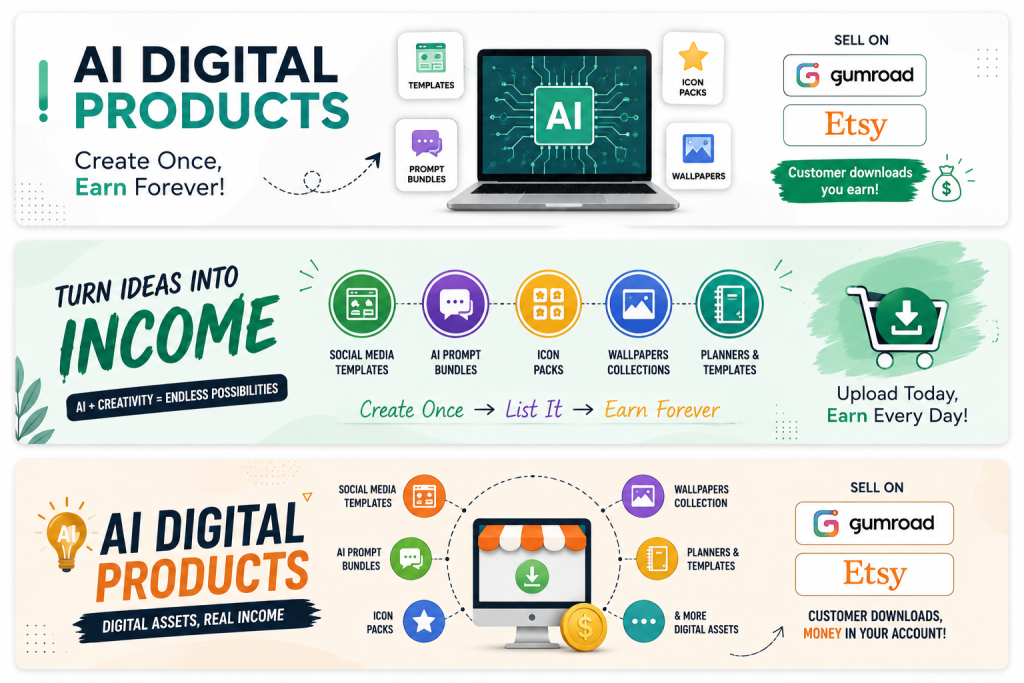
You can turn these resources into downloadable products such as social media templates, AI prompt bundles, icon packs, wallpapers, planners, business templates, ebooks, and creative assets.
The best part? Unlike physical products, digital products do not require warehouses, packaging, or traditional shipping. Once a product is created and properly listed on a digital marketplace, customers can purchase and download it online.
Platforms such as Gumroad and Etsy provide ways for creators to sell digital products online, subject to their current fees, payment availability, seller requirements, and policies.
But creating an AI-generated file is not the same as building a successful digital-product business.
The real opportunity comes from combining artificial intelligence with human creativity, useful ideas, strong design, niche research, quality control, and smart marketing.
What Are AI Digital Products?
AI digital products are digital resources created, assisted, organized, or enhanced using artificial intelligence.
They can be completely digital and delivered electronically to customers.
Popular examples include:
- AI prompt bundles
- Social media templates
- Instagram templates
- Digital planners
- Printable worksheets
- Wallpapers
- Icon packs
- Business templates
- Presentation templates
- Content calendars
- Marketing resources
- Resume templates
- Notion templates
- Digital journals
- Ebooks
- Educational resources
- Branding assets
- Printable wall art
- Creative graphics
The important thing is not whether AI was involved in creating the product.
The important question is:
Does the product provide real value to the customer?
A customer is not paying simply because something was generated by AI.
They are paying because the product saves time, solves a problem, improves their workflow, teaches them something, or gives them a useful creative resource.
Why AI Digital Products Are Attractive
Traditional businesses often require physical inventory, storage, packaging, shipping, and other operational expenses.
Digital products work differently.
A digital product can often be created once and delivered electronically to multiple customers.
For example, imagine creating a collection of 100 social media templates.
After creating and testing the templates, you can package them into a downloadable product.
A customer purchases the product and receives the files digitally.
There is no physical warehouse involved.
There is no box to pack.
There is no traditional shipping process.
This makes digital products particularly interesting for creators who want to build an online business with relatively low physical overhead.
AI can also speed up parts of the creation process.
ChatGPT can help brainstorm product concepts, write descriptions, organize content, generate ideas, and develop structured resources.
AI image-generation tools can help creators explore visual concepts and produce original-looking design directions.
But AI should be viewed as a productivity tool, not a substitute for quality control.
1. Create Social Media Template Packs
Social media is an enormous content market.
Businesses, influencers, freelancers, restaurants, real estate agents, coaches, online stores, and creators constantly need social media graphics.
However, designing posts every day can consume a significant amount of time.
That creates an opportunity for digital template products.
Instead of creating generic templates for everyone, choose a specific audience.
For example:
Instagram Templates for Real Estate Agents
Social Media Templates for Restaurants
Instagram Templates for Online Clothing Stores
Social Media Templates for Coaches
Minimalist Instagram Templates for Small Businesses
A specialized product is often easier to explain and market than a completely generic one.
A template pack could contain:
- Instagram posts
- Instagram stories
- Promotional graphics
- Sale announcements
- Quote templates
- Customer testimonial templates
- Product launch designs
- Carousel templates
- Business announcements
- Holiday promotions
AI can help you brainstorm headlines, captions, content ideas, and campaign concepts.
You can then turn those concepts into polished editable designs.
2. Sell AI Prompt Bundles
AI prompt bundles are another digital-product opportunity.
Many people use AI tools but do not know how to write effective instructions.
A well-organized prompt collection can save users time and help them approach common tasks more systematically.
For example:
100 ChatGPT Prompts for Small Business Owners
200 AI Prompts for Social Media Managers
150 ChatGPT Prompts for Freelancers
Ultimate AI Prompts for Content Creators
Instead of filling a document with random prompts, organize the prompts into categories.
Marketing Prompts
- Content ideas
- Advertising copy
- Product descriptions
- Email marketing
- Social media captions
Business Prompts
- Business ideas
- Market research
- Customer personas
- SWOT analysis
- Business planning
Productivity Prompts
- Daily planning
- Task organization
- Meeting summaries
- Brainstorming
- Goal setting
A useful prompt bundle should be easy to navigate and should clearly explain how customers can customize the prompts.
3. Create AI Wallpaper Collections
Wallpapers can be another creative digital product.
You can create collections for:
- Smartphones
- Tablets
- Desktop computers
- Laptops
- Digital displays
Possible themes include:
- Luxury
- Minimalist
- Abstract
- Nature
- Space
- Architecture
- Futuristic
- Dark aesthetic
- Motivational
- Geometric
- Fantasy
- Technology
You could create a themed collection such as:
50 Luxury Black & Gold Wallpapers
or:
100 Minimalist Desktop Wallpapers
The key is consistency.
A collection should feel like a product rather than a random folder of images.
Before selling AI-generated artwork, carefully check the current commercial-use rights of the AI platform and any other assets used in the product.
4. Build Icon Packs
Icons are useful for websites, applications, presentations, marketing materials, dashboards, and digital products.
You could create niche icon collections such as:
- Business icons
- Finance icons
- E-commerce icons
- Travel icons
- Food icons
- Education icons
- Technology icons
- Social media icons
- Productivity icons
Instead of creating a huge collection of unrelated icons, focus on a specific visual style.
For example:
100 Minimal Business Icons
may be more attractive to a buyer than:
500 Random AI Icons
Consistency and usability are extremely important.
5. Create Digital Planners
Digital planners can help people organize their everyday lives.
Potential categories include:
- Student planners
- Business planners
- Productivity planners
- Budget planners
- Goal planners
- Content planners
- Project planners
- Habit trackers
For example:
30-Day Productivity Planner for Freelancers
could contain:
- Daily planner
- Weekly planner
- Goal tracker
- Habit tracker
- Project planner
- Priority list
- Reflection pages
AI can help you brainstorm useful sections and prompts, while human design and editing turn the concept into a usable product.
6. Develop Business Template Kits
Small businesses often need professional documents and marketing resources.
You can package these needs into downloadable business kits.
A Small Business Marketing Kit, for example, could include:
- Content calendar
- Marketing checklist
- Social media planner
- Campaign planner
- Customer persona worksheet
- Promotional calendar
- Marketing strategy worksheet
The more clearly your product solves a specific problem, the easier it becomes to communicate its value.
How ChatGPT Can Help
ChatGPT can become a powerful assistant throughout your product-development workflow.
You can use it for:
Idea Generation
Ask for digital product ideas based on a specific audience.
Research
Explore customer problems and possible product categories.
Content Creation
Create draft text, descriptions, instructions, and educational material.
Organization
Turn large amounts of information into structured sections.
Marketing
Generate product descriptions, social media ideas, email concepts, and promotional copy.
Product Development
Brainstorm bundles, bonuses, product variations, and future product ideas.
For example, instead of asking:
"Give me digital product ideas."
Try something more specific:
"Give me 25 digital product ideas for freelance designers who want to save time creating social media content."
Specific instructions usually produce more useful results.
How AI Image Generators Can Help
AI image-generation tools can accelerate visual experimentation.
A creator can describe a desired style and explore different concepts.
For example, someone creating luxury wallpapers might experiment with:
- Black marble
- Metallic textures
- Elegant architecture
- Premium interiors
- Abstract geometry
- Minimal compositions
However, generating images is only the beginning.
A professional product requires:
- Selecting the strongest designs
- Removing weak or repetitive images
- Checking resolution
- Standardizing dimensions
- Organizing files
- Creating preview images
- Adding instructions
- Checking licensing requirements
The difference between a random AI image collection and a premium digital product is often curation and presentation.
The Most Important Rule: Solve a Problem
One of the biggest mistakes new creators make is creating products simply because AI makes them easy to generate.
That approach can lead to thousands of generic products.
Instead, ask:
Who is my customer?
What problem do they have?
What takes too much of their time?
What would make their work easier?
What result do they want?
For example:
"500 AI Images"
is a broad product.
But:
"100 Instagram Product Backgrounds for Online Stores"
is much more specific.
The second product communicates its purpose immediately.
That is the difference between creating content and creating a solution.
Selling Digital Products on Gumroad
Gumroad allows creators to sell digital products online.
Depending on the current platform setup and your eligibility, you can create a product page, upload digital files, set pricing, and promote the product.
Potential products include:
- Prompt bundles
- Templates
- Guides
- Ebooks
- Digital resources
- Creative assets
A strong product page should include:
A Clear Product Title
Customers should immediately understand what they are buying.
Attractive Preview Images
Show the product visually.
A Strong Description
Explain the problem your product solves.
What's Included
Clearly list the files and resources.
Usage Instructions
Explain how buyers can use the product.
License Information
Clearly state the permitted use of the product.
Always review Gumroad's current policies, fees, payment availability, and terms before launching.
Selling Digital Products on Etsy
Etsy is another marketplace where sellers can offer digital downloads.
Because Etsy has customers searching for creative and downloadable products, it can be attractive for certain types of digital assets.
However, competition can be significant.
Your listing should therefore be optimized around:
- Clear product positioning
- Relevant search terms
- Strong listing images
- Clear descriptions
- Competitive pricing
- High product quality
- Customer reviews
- Consistent branding
For example, instead of simply listing:
Digital Planner
you could create:
Minimal Digital Planner for Freelancers
The second title gives the customer more information.
Always review Etsy's current rules concerning AI-assisted and AI-generated products before listing.
How to Price Your Digital Products
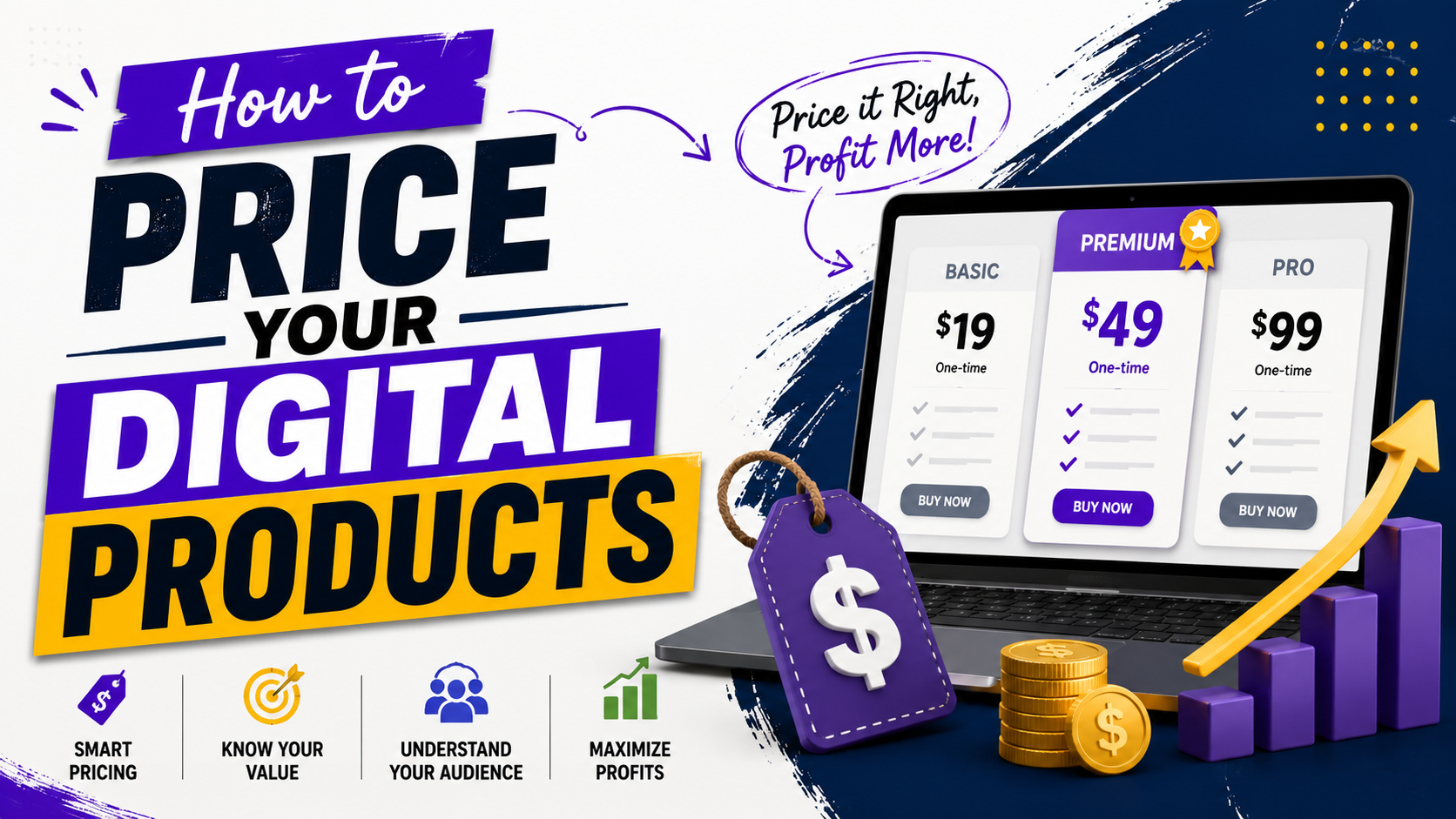
There is no single perfect price.
Pricing depends on:
- Product type
- Quality
- Number of assets
- Target audience
- Competition
- Product usefulness
- Brand positioning
A simple wallpaper collection and a complete business toolkit should not necessarily have the same price.
Do not automatically assume that cheaper means easier to sell.
A professionally designed product with a clear benefit can justify a higher price than a generic collection.
Think about the value created for the customer.
If your product saves a business several hours of work, its perceived value can be much greater than the cost of the digital file itself.
Create Product Bundles
Bundles can increase perceived value.
For example:
Basic Product
50 Instagram Templates
Premium Product
100 Instagram Templates
50 Story Templates
30 Promotional Designs
100 Caption Ideas
30-Day Content Calendar
Ultimate Bundle
Everything above +
AI Marketing Prompt Pack
Hashtag Planning Worksheet
Content Strategy Guide
The bundle approach gives customers different purchasing options.
It can also create a natural path from a low-cost entry product to a more comprehensive product.
Build a Digital Product Brand
Do not think only about selling individual files.
Think about building a brand.
Suppose your target audience is small businesses.
You could create:
Product 1: Social Media Template Pack
Product 2: Content Calendar
Product 3: AI Marketing Prompts
Product 4: Business Planner
Product 5: Branding Kit
Product 6: Complete Small Business Toolkit
Now your products form a connected ecosystem.
Customers who purchase one product may discover your other products.
Over time, this can become more powerful than relying on one individual listing.
Marketing Your Digital Products
Creating the product is only half the job.
People need to discover it.
You can promote your products through:
- TikTok
- YouTube
- Email marketing
- Blogging
- Short-form videos
- Online communities
For example, if you sell social media templates, create short videos showing how quickly someone can turn a blank design into a professional social media post.
If you sell AI prompts, create educational content showing how better prompts can improve someone's workflow.
If you sell wallpapers, publish attractive previews.
Your marketing content should demonstrate the product's usefulness rather than simply saying:
"Buy my product."
Give Away a Free Sample
Free samples can help potential customers understand your quality.
For example:
10 Free ChatGPT Prompts
can introduce customers to your larger:
500 ChatGPT Prompt Bundle
Or:
5 Free Instagram Templates
can introduce customers to your:
100 Premium Instagram Templates
The free product becomes a demonstration of what you can provide.
Quality Control Matters
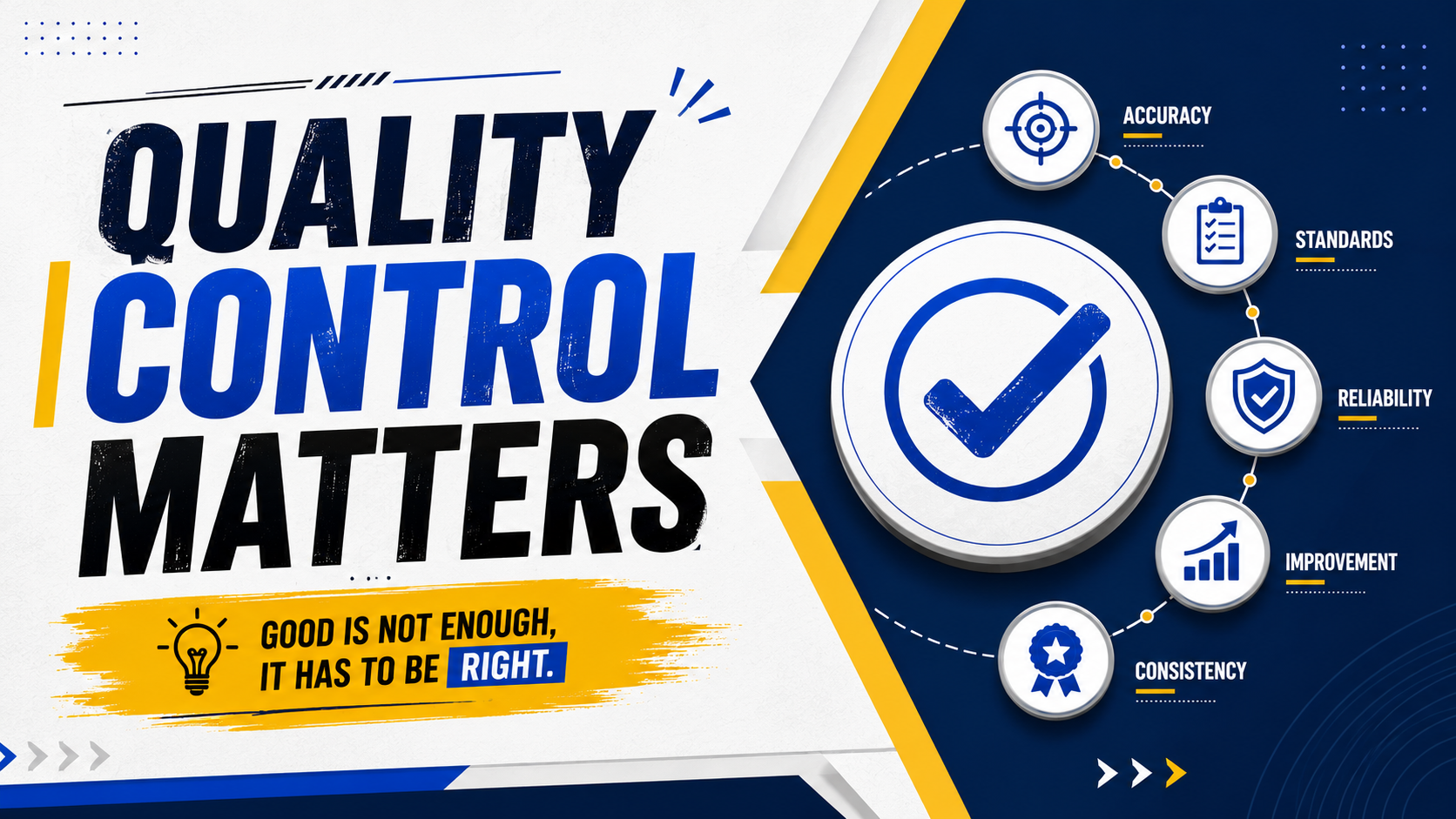
Never upload AI-generated products without checking them.
Review:
- Spelling
- Grammar
- Formatting
- Image quality
- File dimensions
- Duplicate files
- Broken links
- Incorrect information
- Licensing
- Commercial-use rights
- Marketplace requirements
For AI images, inspect the details carefully.
For prompt bundles, test important prompts.
For templates, make sure editable elements work correctly.
For educational products, verify important information.
Your reputation is connected to the quality of your product.
Copyright and Licensing
This is one of the most important parts of selling AI digital products.
Before publishing anything, make sure you understand the rights associated with every component.
This includes:
- AI-generated images
- Fonts
- Stock images
- Icons
- Illustrations
- Music
- Templates
- Third-party graphics
Never assume that an image found online is automatically available for commercial use.
You should also review the latest commercial-use rules of the AI tools you use.
Marketplace policies can also change.
Responsible creators check the rules before selling.
A Simple AI Digital Product Business Plan
Here is a straightforward process you can follow.
Step 1 — Choose a Niche
Pick a specific audience.
Step 2 — Find a Problem
Identify something that costs your target customer time, money, or effort.
Step 3 — Design a Solution
Use AI to help develop the initial product.
Step 4 — Add Human Creativity
Edit, improve, organize, and customize the content.
Step 5 — Package Everything
Create a clean folder structure and easy-to-follow instructions.
Step 6 — Create Preview Images
Show potential customers exactly what they will receive.
Step 7 — Write the Listing
Explain the product, benefits, included files, and usage rights.
Step 8 — Choose a Marketplace
Consider platforms such as Gumroad or Etsy based on your audience and product type.
Step 9 — Promote
Create useful content around the problem your product solves.
Step 10 — Improve
Use customer feedback to make future products better.
Is This Really Passive Income?
The phrase "passive income" can be misleading.
Digital products can reduce fulfillment work because customers can receive files digitally.
But creating a successful digital-product business still requires work.
You may need to:
- Research new products
- Create and update products
- Market your store
- Respond to customers
- Improve product listings
- Monitor platform policies
- Handle customer issues
- Create new products
A more realistic description is:
Digital products can create scalable online income with relatively low physical fulfillment requirements.
That is still a powerful advantage.
Start With One Product
You do not need 100 products on your first day.
Start with one.
For example:
50 AI Prompts for Small Business Marketing
Create it carefully.
Test it.
Package it professionally.
Publish it.
Promote it.
Listen to feedback.
Then create a second product.
Eventually, you could develop:
100 AI Marketing Prompts
followed by:
Complete AI Marketing Toolkit
This approach reduces the risk of spending months creating products nobody wants.
Start small.
Learn.
Improve.
Scale.
The Future of AI Digital Products
Artificial intelligence is changing the creator economy.
As AI tools become more capable, creating basic digital content will become easier.
That will also increase competition.
The creators who stand out will not necessarily be those who generate the most content.
They will be the ones who understand:
Customer Needs + Niche Expertise + AI + Creativity + Quality + Marketing
AI can help you work faster.
But understanding your customer helps you create something worth buying.
The future of digital products will likely belong to creators who use AI strategically rather than blindly.
Final Thoughts
AI has made digital-product creation more accessible than ever.
You can use ChatGPT to brainstorm ideas, develop content, organize resources, write descriptions, and improve your workflow.
AI image-generation tools can help you explore visual concepts.
Design software can turn those concepts into polished templates.
Platforms such as Gumroad and Etsy can provide marketplaces where eligible sellers can offer digital products to customers around the world.
But the opportunity is not simply:
"Use AI and make money."
The better strategy is:
Find a problem → Create a useful solution → Improve it with AI → Package it professionally → Market it effectively.
Do not focus on producing the largest number of AI-generated files.
Focus on creating products that customers actually want.
Your AI tools are not the business.
The value you create with those tools is the business.
Start with one niche.
Choose one problem.
Build one useful product.
Publish it.
Learn from the market.
Then keep improving.
The digital economy is evolving quickly, and AI is giving individual creators new ways to participate.
The opportunity is real—but success will come from value, originality, quality, consistency, and customer understanding, not from AI generation alone.